





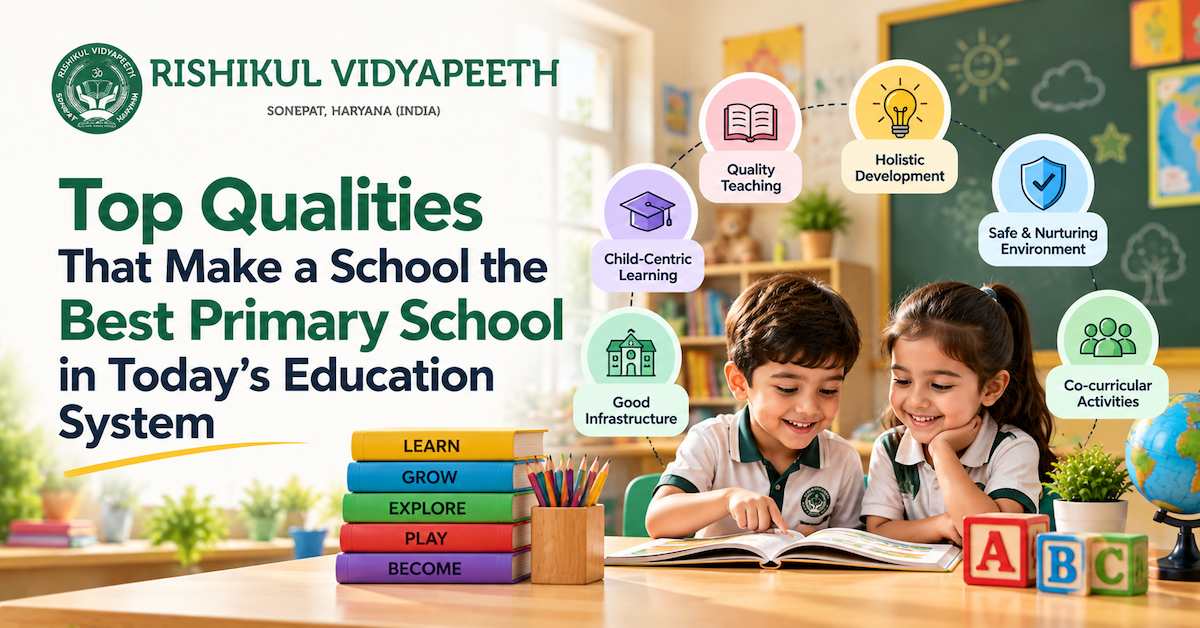
Top Qualities That Make a School the Best Primary School in Today’s Education System
Choosing the right primary school for your child can feel like navigating a maze. With countless options available, parents often wonder: what really makes a school stand out? In today’s education system, the best primary schools don’t just focus on academics—they aim to nurture well-rounded, confident, and happy individuals. At Rishikul Vidyapeeth School in Sonipat, we believe in blending quality education with holistic development, ensuring every child thrives in a supportive environment.
Understanding the Modern Education Landscape
Importance of Early Childhood Education
Primary school years are critical. They lay the foundation for lifelong learning, social skills, and emotional growth. The right school provides an environment where children are encouraged to explore, ask questions, and develop a love for learning.
Challenges Faced by Primary Schools Today
From integrating technology to balancing academic pressure with extracurricular activities, primary schools face numerous challenges. Schools that adapt to modern educational trends while maintaining quality care for each child stand out as leaders.
Quality of Teaching Staff
Qualifications and Training of Teachers
A school’s backbone is its teachers. Well-qualified, certified educators with specialized training in primary education can make a world of difference. They understand how children learn and tailor lessons to meet diverse learning needs.
Passion and Dedication in Teaching
Beyond qualifications, a teacher’s passion can ignite a child’s curiosity. At Rishikul Vidyapeeth, teachers are not just instructors—they are mentors who inspire, motivate, and guide each student to achieve their full potential.
Student-Centered Learning Approach
Personalized Learning Programs
Every child learns differently. Top primary schools implement personalized programs that adapt to each student’s pace, strengths, and challenges, making learning more effective and enjoyable.
Encouraging Curiosity and Critical Thinking
Instead of rote memorization, students are encouraged to question, analyze, and think critically. This approach fosters creativity and prepares children for real-world problem-solving.
Comprehensive Curriculum
Balanced Academic and Extracurricular Activities
A well-rounded curriculum balances core subjects with extracurricular opportunities. This ensures children grow intellectually, socially, and physically.
Inclusion of STEM and Arts Education
Science, Technology, Engineering, Mathematics (STEM), and arts programs cultivate both analytical and creative skills. Schools that emphasize these areas equip students for a versatile future.
Safe and Supportive Environment
Physical Safety Measures
Safety is non-negotiable. From secure classrooms to strict entry protocols, top schools prioritize the physical safety of every child.
Emotional and Mental Health Support
A supportive environment also nurtures mental well-being. Counsellors, peer support systems, and stress management programs help children navigate challenges confidently.
Technology Integration
Smart Classrooms and Digital Tools
Modern classrooms equipped with interactive boards, projectors, and educational software enhance engagement and learning outcomes.
E-Learning Opportunities
Digital learning platforms allow students to access resources, practice skills, and continue learning beyond the classroom, ensuring a seamless educational experience.
Focus on Holistic Development
Sports and Physical Education
Physical activity is crucial for growth. A strong sports program promotes fitness, teamwork, and discipline.
Personality and Leadership Development
Leadership activities, public speaking, and group projects empower students, building confidence and social skills essential for future success.
Strong Parent-Teacher Communication
Regular Updates and Meetings
Transparent communication with parents keeps them informed about academic progress and behavior, ensuring a strong support system for each child.
Involving Parents in School Activities
Engaging parents in school events and decision-making fosters a collaborative environment, strengthening the home-school connection.
Extracurricular and Co-Curricular Opportunities
Clubs, Competitions, and Field Trips
Hands-on learning outside the classroom encourages curiosity and practical understanding. Clubs and competitions allow students to explore passions beyond academics.
Creative and Performing Arts
Drama, music, painting, and dance nurture creativity and self-expression, helping children discover hidden talents.
Inclusivity and Diversity
Respect for Cultural and Social Differences
The best schools embrace diversity, teaching children to respect and appreciate different cultures, languages, and backgrounds.
Supporting Children with Special Needs
An inclusive school provides specialized programs and support for students with learning differences, ensuring no child is left behind.
Infrastructure and Facilities
Modern Classrooms and Learning Spaces
Bright, ventilated classrooms with ergonomic furniture create a comfortable and stimulating learning environment.
Libraries, Labs, and Playgrounds
Well-equipped libraries, science labs, and spacious playgrounds enrich learning experiences and foster curiosity and exploration.
Emphasis on Values and Ethics
Character Building Programs
Moral education, ethical discussions, and community service teach children the importance of integrity, empathy, and responsibility.
Community Service and Social Responsibility
Encouraging students to participate in social initiatives develops compassion and civic awareness, shaping them into responsible citizens.
Recognition and Accreditation
Awards, Rankings, and Certifications
Recognition from educational boards and awards validate the school’s commitment to quality education and continuous improvement.
Affiliations with Educational Boards
Affiliation with reputed boards ensures standardized education while providing students with opportunities for competitive exams and higher education pathways.
Conclusion
Choosing the best primary school goes beyond academics. A school like Rishikul Vidyapeeth in Sonipat combines qualified teachers, a comprehensive curriculum, safe infrastructure, technology integration, and holistic development opportunities to nurture confident, well-rounded students. With strong values, extracurricular opportunities, and inclusive practices, such schools prepare children to thrive not only academically but socially and emotionally as well.
FAQs
1. What makes a primary school truly “best”?
A combination of quality teaching, holistic development, safe environment, and modern facilities defines the best primary school.
2. How important is technology in today’s primary education?
Very important. Technology enhances engagement, supports personalized learning, and provides access to a wider range of educational resources.
3. Can extracurricular activities impact academic performance?
Yes, they improve social skills, critical thinking, and confidence, which positively influence academic success.
4. How do schools support children with special needs?
Top schools offer personalized learning plans, specialized staff, and inclusive programs to ensure equal opportunities for all students.
5. Why is parental involvement essential in primary education?
Parental engagement strengthens learning at home, reinforces school values, and creates a supportive environment for children to thrive.
