





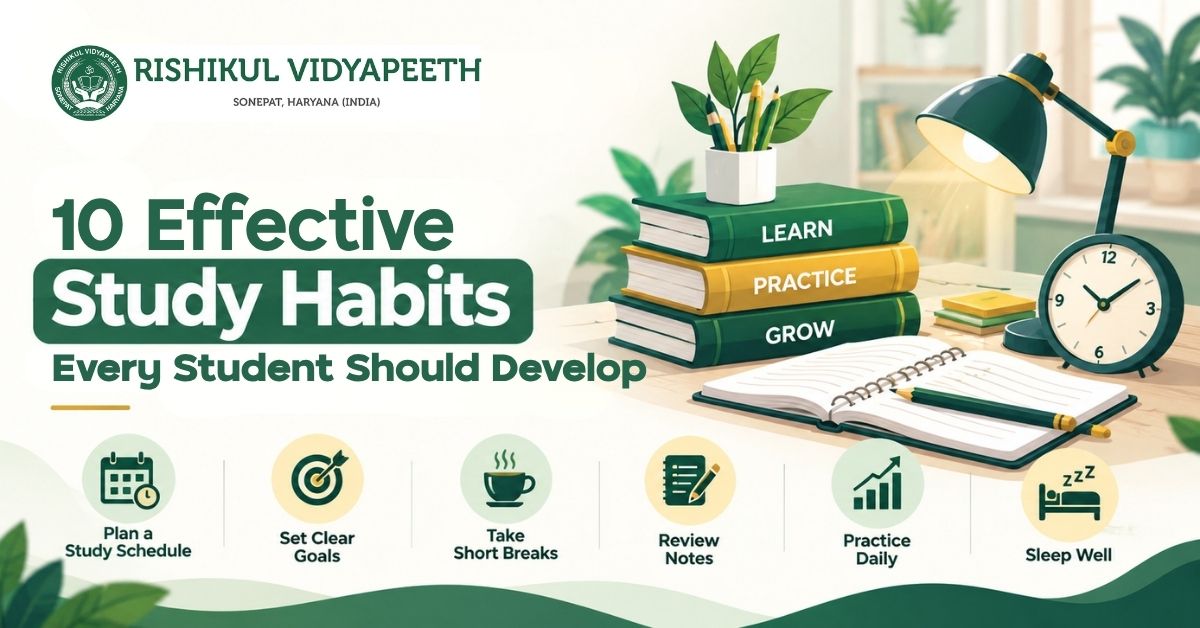
10 Effective Study Habits Every Student Should Develop
Studying is not just about spending long hours with books. The way a student studies can make a big difference in understanding, remembering, and applying what they learn.
Good study habits help students stay organised, manage their time, reduce exam stress, and become more confident learners. These habits do not develop overnight, but with regular practice, they can become a natural part of a student's daily routine.
Here are 10 effective study habits every student should develop for better learning and academic growth.
1. Create a Regular Study Schedule
A regular study routine helps students manage their time effectively. Instead of waiting until exams are near, students should set aside specific time for studying every day.
A simple study schedule can include:
- School and homework time
- Revision
- Reading
- Practice questions
- Breaks
- Sports and physical activity
- Hobbies and relaxation
A consistent routine makes studying more manageable and reduces the need for last-minute preparation.
2. Set Small and Clear Goals
Studying without a clear goal can make it difficult to stay focused.
Instead of saying, "I will study mathematics today," students can set a specific goal such as:
"I will complete two chapters and practise 15 questions."
Small and achievable goals give students a clear direction and help them track their progress.
As students complete each goal, they also gain a sense of achievement and motivation to continue.
3. Choose a Quiet and Comfortable Study Space
A good study environment can make it easier to concentrate.
Students should try to study in a clean, well-lit, and comfortable space with the materials they need nearby. Unnecessary distractions such as television, loud conversations, and constant phone notifications should be avoided.
A dedicated study area can also help the mind associate that space with learning and concentration.
4. Take Useful Notes
Taking notes is an important study skill. Instead of trying to write down every word a teacher says, students should focus on important concepts, definitions, examples, formulas, and key points.
Students can use:
- Short points
- Headings and subheadings
- Diagrams
- Tables
- Mind maps
- Their own words
Writing information in a simple form can make revision easier later.
5. Avoid Last-Minute Studying
Trying to complete an entire syllabus just before an examination can create unnecessary stress.
Regular revision is much more effective than relying only on last-minute preparation. Students can divide larger topics into smaller sections and revise them regularly.
For example, revising a chapter several times over a few weeks can help students understand and remember it better than studying the same chapter for several hours the night before an exam.
6. Use Active Learning Techniques
Simply reading a textbook repeatedly may not always be enough.
Students can make learning more active by:
- Explaining a concept in their own words
- Solving practice questions
- Making flashcards
- Teaching a topic to someone else
- Creating mind maps
- Asking questions
- Taking practice tests
Active learning encourages students to think about the information rather than simply reading it.
7. Take Regular Breaks
Studying continuously for many hours can make students tired and reduce concentration.
Short breaks can help students refresh their minds. During a break, they can stand up, stretch, walk around, drink water, or do something relaxing.
Students should avoid turning a short break into a long period of scrolling through social media or watching videos, as this can make it harder to return to studying.
A balanced study routine includes both focused learning and appropriate breaks.
8. Keep Digital Distractions Under Control
Phones, social media, games, and constant notifications can make concentration difficult.
Students can keep their phones away during study sessions or switch off unnecessary notifications. If a computer or tablet is required for schoolwork, students should try to use it primarily for the task they are completing.
Technology can be a valuable learning tool when used responsibly, but it should not constantly interrupt study time.
9. Ask for Help When Needed
Finding a topic difficult does not mean that a student is not capable of learning it.
Students should feel comfortable asking teachers, parents, classmates, or mentors for help when they do not understand something.
Asking questions early can prevent small learning gaps from becoming bigger problems later.
A good learner is not someone who knows everything. A good learner is someone who is willing to ask questions and keep learning.
10. Get Enough Sleep and Stay Healthy
Good study habits are not limited to books and revision. A healthy body and mind also support effective learning.
Students should make time for:
- Adequate sleep
- Healthy meals
- Regular physical activity
- Drinking enough water
- Outdoor activities
- Relaxation and hobbies
Sleep is particularly important because tired students may find it harder to concentrate, remember information, and perform at their best.
A balanced lifestyle can therefore support both learning and overall well-being.
How Parents Can Help Students Develop Good Study Habits
Parents can support children without creating unnecessary academic pressure.
They can:
- Help children create a realistic routine.
- Provide a suitable study environment.
- Encourage regular revision.
- Appreciate effort and improvement.
- Avoid constant comparisons with other students.
- Encourage children to ask for help.
- Make time for sports, hobbies, and relaxation.
- Discuss challenges calmly.
The aim should be to help children become independent learners rather than making them completely dependent on parents for their studies.
Good Study Habits Take Time to Build
Students do not need to adopt all these habits perfectly from the beginning. It is better to start with one or two changes and gradually build a consistent routine.
For example, a student can begin by creating a daily study schedule. After that becomes comfortable, they can add regular revision, active learning, better note-taking, and reduced digital distractions.
Small improvements made consistently can lead to better learning habits over time.
Conclusion
Effective studying is not about sitting with books for the longest possible time. It is about studying with focus, planning, consistency, and the right techniques.
Creating a regular schedule, setting clear goals, taking good notes, revising regularly, using active learning, managing distractions, asking for help, and maintaining a healthy lifestyle can help students become more confident and independent learners.
Most importantly, students should remember that academic success is a journey. Developing good study habits today can help them not only perform better in school but also develop valuable skills such as discipline, time management, responsibility, and self-learning that can benefit them throughout life.
FAQs
1. What is the most important study habit for students?
Consistency is one of the most important study habits. Regular study and revision can be more useful than relying on long study sessions just before examinations.
2. How can students improve their concentration?
Students can improve concentration by studying in a quiet environment, setting clear goals, keeping digital distractions away, taking short breaks, and maintaining a healthy sleep routine.
3. How long should a student study at one time?
There is no single study duration that works for every student. Study sessions should be appropriate for the student's age, attention span, subject, and workload, with regular breaks when needed.
4. Should students study every day?
A regular study routine can help students stay up to date with their lessons and reduce last-minute stress. Daily study does not necessarily mean studying for many hours; consistency and focused learning are more important.
5. How can parents encourage good study habits?
Parents can provide a supportive study environment, encourage routines, appreciate effort, help children manage their time, and encourage them to ask teachers for help when they face difficulties.
