





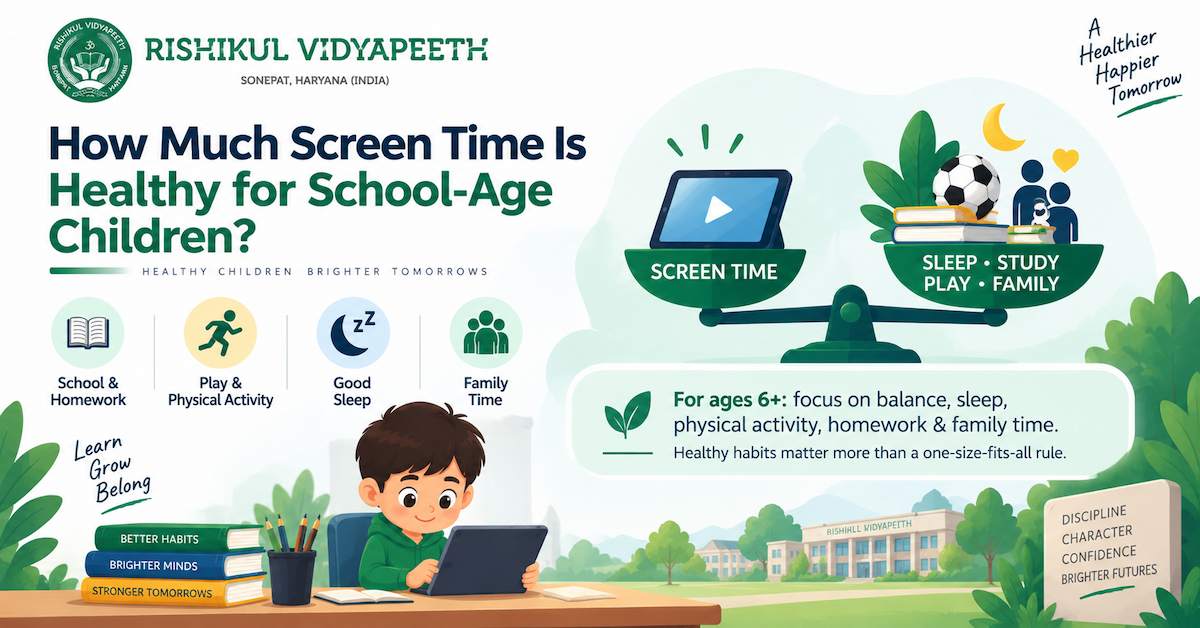
How Much Screen Time Is Healthy for School-Age Children?
Screens are now a normal part of children's lives. Students use computers and tablets for schoolwork, watch educational videos, play games, communicate with friends, and enjoy entertainment. While technology can support learning and creativity, too much recreational screen use can affect sleep, physical activity, family time, and other important parts of childhood.
So, how much screen time is healthy for school-age children?
There is no single number that works for every child. The type of screen use, the child's age, sleep schedule, physical activity, schoolwork, and overall daily routine all matter. The goal should be to create a healthy balance rather than simply counting every minute spent on a screen.
What Counts as Screen Time?
Screen time generally includes time spent using devices such as:
- Smartphones
- Tablets
- Computers and laptops
- Televisions
- Gaming consoles
- Streaming platforms
Not all screen time has the same purpose. Completing homework, attending an online class, reading an educational resource, playing a game, and watching entertainment are very different activities.
Parents should therefore consider what children are doing on screens, not just how long they are using them.
How Much Screen Time Is Healthy?
For school-age children, recreational screen use should be balanced with other important activities such as sleep, physical activity, schoolwork, reading, hobbies, family interaction, and social activities.
Rather than focusing only on a strict daily limit, parents can create reasonable boundaries around recreational screen use.
A healthy routine should ensure that screens do not regularly replace:
- Adequate sleep
- Outdoor play and physical activity
- Homework and reading
- Family conversations
- Face-to-face friendships
- Creative activities
- Meals and family time
The right amount may therefore vary from child to child.
1. Prioritise Sleep
Sleep is essential for children's physical growth, emotional well-being, concentration, and learning.
Using phones, tablets, televisions, or gaming devices close to bedtime can make it harder for some children to settle down and maintain a healthy bedtime routine.
Parents can create a simple rule such as keeping recreational screens away during the bedtime routine and keeping devices outside the bedroom at night.
A consistent sleep schedule is more important than allowing screens to interfere with rest.
2. Make Time for Physical Activity
Children need regular physical activity for healthy growth and development.
If screen use replaces outdoor play, sports, walking, cycling, or other physical activities, parents should consider reducing recreational screen time.
Encourage children to take regular breaks from sitting and spend time playing outdoors or participating in sports.
Activities such as football, swimming, cycling, running, and other games can help children stay active while also developing teamwork and confidence.
3. Create Screen-Free Mealtimes
Meals are an opportunity for families to talk and connect. Watching television or using phones during meals can reduce opportunities for conversation.
A simple screen-free meal rule can help children develop healthier habits.
Parents can use mealtimes to ask children about their school day, friends, activities, or something new they learned.
Small routines like these can make a significant difference in family interaction.
4. Encourage Educational and Creative Screen Use
Not all screen activities are simply entertainment.
Technology can help children learn new subjects, explore their interests, practise skills, create presentations, learn coding, watch educational content, and discover new ideas.
Parents should encourage children to use technology actively and creatively rather than spending long periods passively watching content.
For example, creating a digital project can provide a different learning experience from continuously scrolling through short videos.
5. Set Clear and Consistent Rules
Children often respond better to screen-time rules when those rules are clear and consistent.
Parents can decide:
- When screens can be used
- Which devices are allowed
- Which types of content are appropriate
- Where devices can be used
- When devices need to be switched off
- What happens when screen-time rules are not followed
Rules should also be age-appropriate and adjusted as children become more independent.
6. Teach Children to Take Breaks
Long periods of uninterrupted screen use can contribute to tired eyes, poor posture, and physical inactivity.
Encourage children to take regular breaks, move around, stretch, look away from the screen, and change activities.
For schoolwork that requires a computer, short breaks can help children return to their work with better attention.
7. Be a Good Digital Role Model
Children learn from what adults do.
If parents regularly use their phones during meals, conversations, or family activities, children may find it difficult to understand why they should follow different rules.
Parents can model healthy technology habits by putting their own devices away during family time, avoiding unnecessary phone use, and showing children how technology can be used responsibly.
Signs That Screen Time May Need Attention
Parents may want to review their child's screen habits if they notice:
- Difficulty sleeping or an irregular sleep routine
- Reduced interest in outdoor activities
- Difficulty stopping screen use
- Frequent arguments about devices
- Declining interest in hobbies or social activities
- Difficulty concentrating on schoolwork
- Using screens during meals or late at night
- Screen use regularly replacing family or social interaction
One sign alone does not necessarily indicate a problem. However, a consistent pattern may be a reason to reassess the child's daily routine.
A Simple Balanced Routine
Instead of asking only, "How many hours can my child use a screen?", parents can ask:
"Does my child's daily routine include everything they need for healthy growth?"
A balanced day can include:
School + Homework + Sleep + Physical Activity + Family Time + Hobbies + Social Interaction + Appropriate Screen Use
When these areas are balanced, screen use becomes one part of a child's day rather than the centre of it.
What About Screen Time for Homework?
Schoolwork involving computers or tablets is different from recreational screen use. Students may need digital devices for research, assignments, presentations, online learning, and other educational activities.
Parents can focus on helping children maintain good habits while using devices for schoolwork:
- Encourage proper sitting posture.
- Take regular breaks.
- Reduce unnecessary notifications.
- Keep entertainment apps separate from study time.
- Encourage children to focus on one task at a time.
- Ensure that screen use does not regularly interfere with sleep.
Parents and Schools Can Work Together
Healthy digital habits are easier to develop when children receive consistent guidance at home and at school.
Schools can teach students about digital responsibility, online safety, healthy technology use, and responsible use of digital resources. Parents can reinforce these habits at home.
The goal is not to keep children away from technology. Instead, children should learn how to use technology in a balanced, safe, productive, and responsible way.
Conclusion
There is no universal screen-time number that is perfect for every school-age child. What matters most is whether screen use fits into a healthy overall routine.
Children need sufficient sleep, physical activity, learning, family interaction, hobbies, social connections, and time away from devices. Technology can be a valuable part of childhood when it supports these areas rather than replacing them.
By setting clear boundaries, encouraging healthy habits, choosing appropriate content, and modelling responsible device use, parents can help children develop a healthy relationship with technology that can benefit them throughout their school years and beyond.
FAQs
1. How much screen time should a school-age child have?
There is no single amount that is appropriate for every school-age child. Parents should consider the child's age, sleep, physical activity, schoolwork, social life, and the type of screen use.
2. Should educational screen time count?
Educational screen use is different from recreational screen use. However, children still need breaks and should not allow device use to interfere with sleep, physical activity, or other important activities.
3. Should children use phones before bed?
It is generally helpful to avoid recreational screen use close to bedtime and to maintain a consistent bedtime routine. Keeping devices outside the bedroom can also make it easier to avoid late-night use.
4. How can parents reduce screen time without constant arguments?
Set clear rules in advance, provide alternative activities, give children some choices within those boundaries, and apply the rules consistently. Gradual changes may be easier than suddenly removing devices.
5. What should children do instead of using screens?
Encourage outdoor play, sports, reading, creative activities, hobbies, family activities, board games, social interaction, and other age-appropriate interests.
